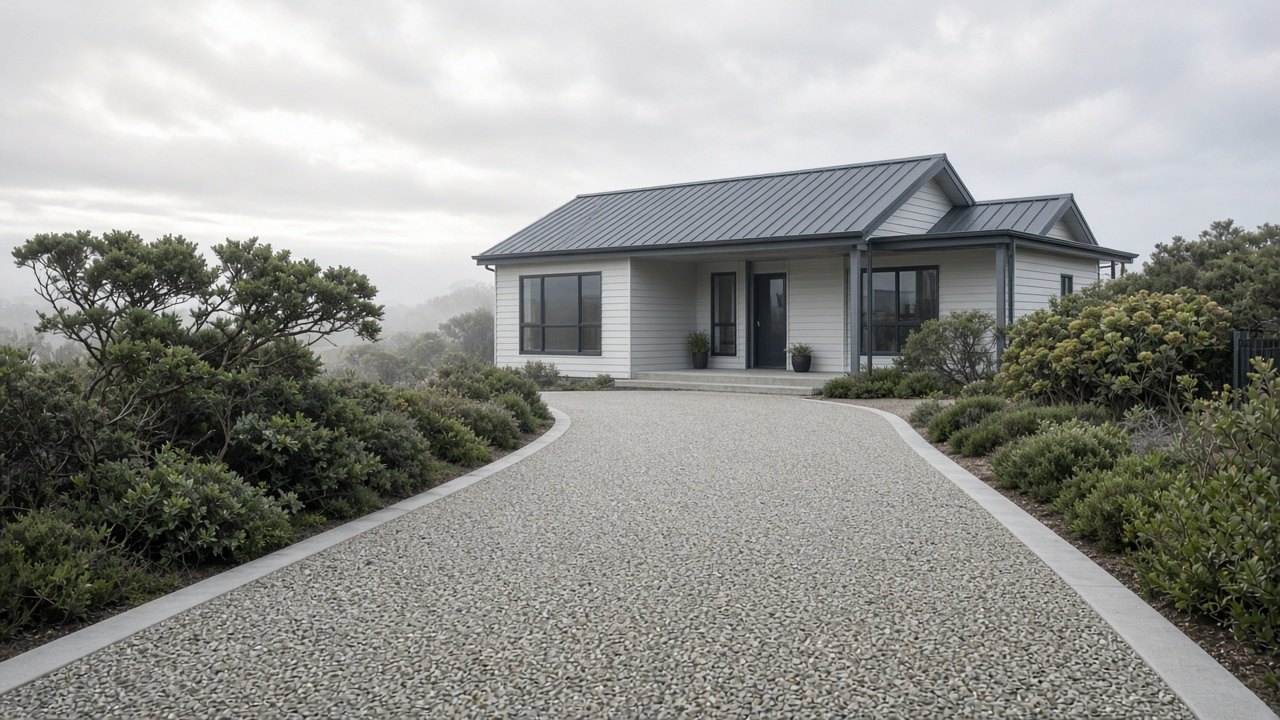
Concrete driveways on Bass Coast sand and clay
Between the beaches and the hills, Bass Coast ground swings from loose dune sand to heavy clay. This guide explains what that means for a concrete driveway and what to ask your concreter.
Email: info@wonthaggiconcreting.com.au
Dune sand near the coast
In Cape Paterson, Inverloch, Kilcunda and parts of Phillip Island, the ground under a driveway is often clean sand. It drains well and is stable when it is confined and compacted, but it runs like water when it is loose or when stormwater is concentrated against it. A driveway on sand needs the loose top layer removed, a compacted rock base, edges that are protected or thickened, and drainage that stops runoff scouring under the slab.
Reactive clay inland
Toward North Wonthaggi, Dalyston, Grantville and the farming country, clay is common. It swells when it is wet and shrinks when it dries, so a slab placed straight on it can lift and crack. Soft or saturated clay is dug out and replaced with compacted rock, water is kept away from the edges, and reinforcement and joints are set out to cope with seasonal movement.
Fill and mining history
Wonthaggi was built on coal. Around the town and South Dudley, it is not unusual to find coal wash, ash, broken brick and old footings under a garden. Fill like this settles unevenly and has to come out or be properly compacted before a base is built.
Thickness and steel
Slab depth and reinforcement should suit the heaviest vehicle that will use the driveway. Boats, caravans, horse floats, delivery trucks and farm machinery are all common here, and each needs more than a family car.
Joints, edges and finish
Planned saw cuts let the slab crack where you want it to, in straight lines, rather than randomly. Edges should be formed square and supported. Grippy finishes such as exposed aggregate or broom suit coastal mist and wet winters.
Salt and sealing
Close to the beach, a quality sealer helps keep salt and moisture out of the surface and makes cleaning easier. Steel needs proper cover in the slab so it is not attacked over time.
Questions to ask before you book
Will you dig a test hole? How deep will you excavate, and what will you do if you find soft clay or fill? What rock and how much? What thickness and reinforcement? Where will the joints be? Where will the water go? Who arranges the Bass Coast Shire crossing permit? What sealer, if any, is included?
Talk to a Wonthaggi concreter
Site visits and itemised written quotes are free from Wonthaggi to Inverloch, Phillip Island and Grantville. There are no rates online because coastal sand, inland clay and access change from block to block.